1968 Shelby DSO codes
How to read the warranty tag
In most cases, 1968 Shelby warranty tags are found on the rear face of the driver's door. The tags have unique codes that frustrate
people that are not familiar with Shelbys. DSO is short for District Special Order or Domestic Special Order.
The first thing you should know is not all Shelby codes were the same as Mustang codes. Many people mistakenly believe that because Shelbys started as Mustangs, the codes are the same.
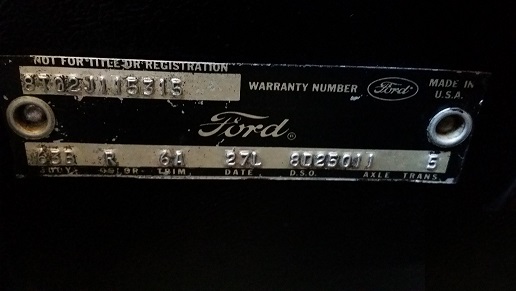
Several of these codes are self evident. Line one is the Ford serial number. The body code, the paint color code and the trim code follow.
The next code is a scheduled date code. These codes are all the same as a Mustang.
Shelbys were ordered from Ford in batches. All Shelby DSO Codes start with "8D". That part of the code indicates this was a specially ordered vehicle.
Unlike Mustangs, you can not tell where a Shelby was shipped by the DSO code. I have included the shipping destinations in the chart below to illustrate this.
The size of each batch varied. It could have been a single car or a hundred cars.
The one thing we do know is all the cars in the batch shared similiar features.
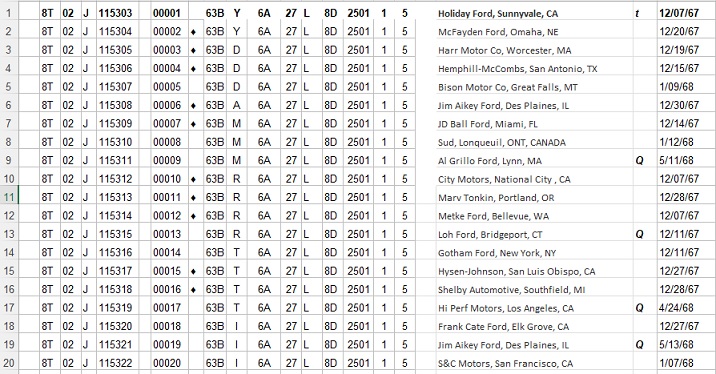
In this example, we are looking at the first batch of cars ordered. It is denoted by the code "8D2501" (center of chart). All of the cars in this batch, were GT350 fastbacks with a black interior.
Additionally, they all had 3.89 rear axles and 4 speed transmissions. By looking in the Shelby American World Registry we can see there were 20 cars in this order.
Their warranty tags are all the same, with the exception of the color codes.
The rear axle tag code is "1" and it actually appears to be part of the DSO code. The code "5" over the transmission is for a 4 speed.
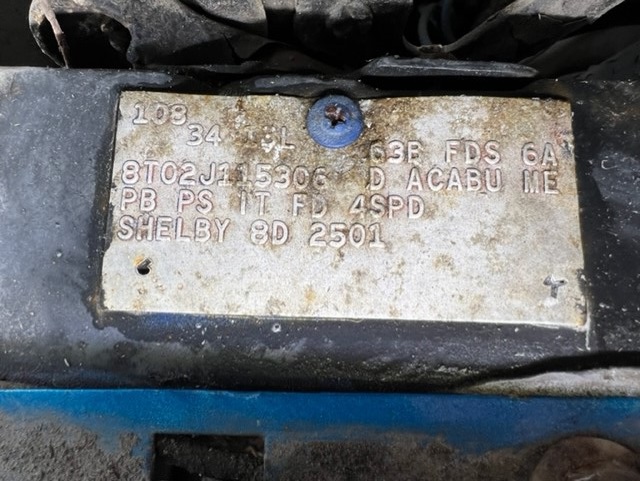
Here is another car from the same DSO order - 8D2501. You can see some early build tags actually included the DSO code on them.
There were over 500 different orders that comprised 1968 Shelby production. The highest DSO was 8D3070.
The DSO code is not just another code, but understanding it can help you understand production and how cars were built.
HOME